Like Nastya: Party Time
Like Nastya OfficialEducational
4.7283.00 Reviews
- Version
- 1.8.3
- Installs
- 10.00M
- Age Rating
- Everyone
Screenshots
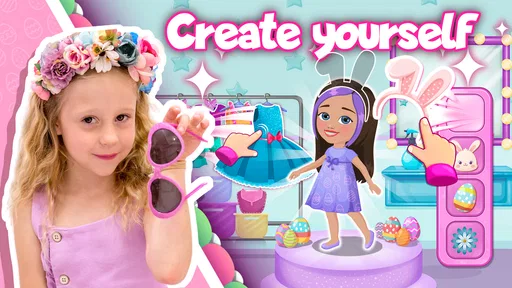
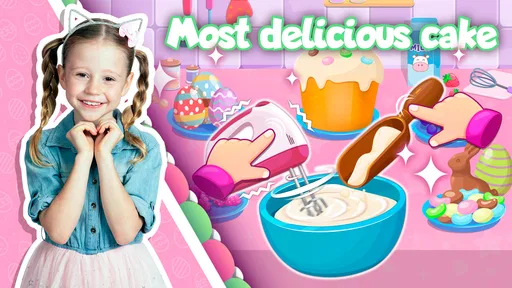
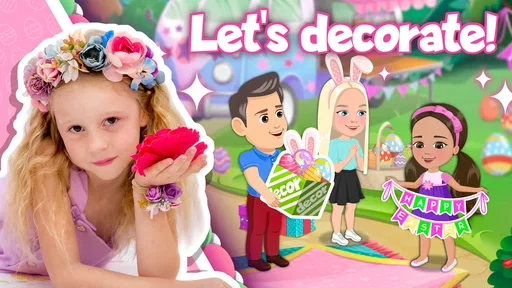
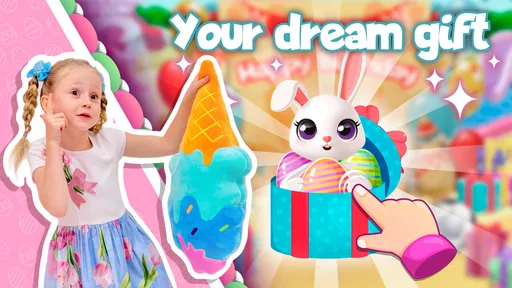
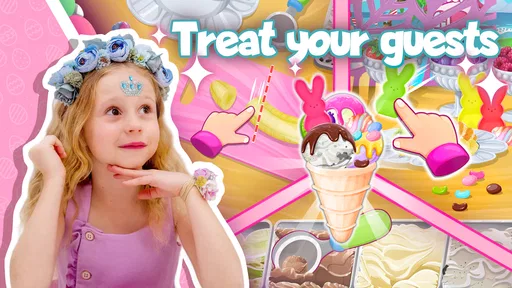
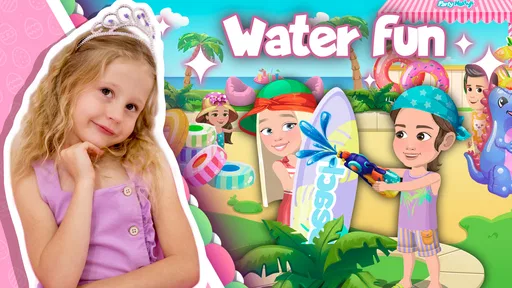
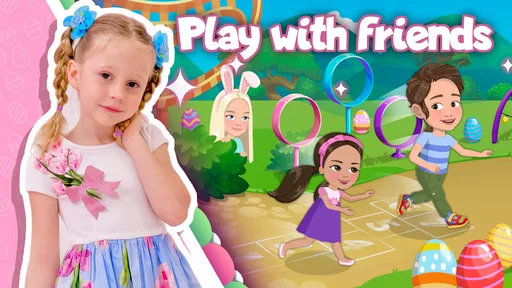
Our Review of Like Nastya: Party Time
 Analysis by Appyee
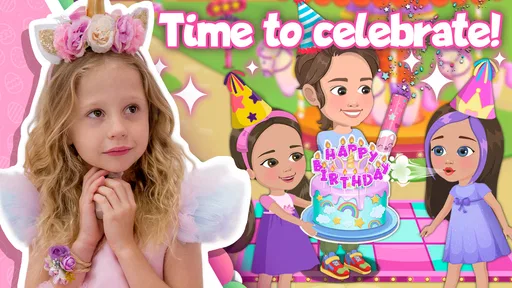
Like Nastya: Party Time is a free educational game built around a child-friendly birthday-party setting. I found its strongest idea in the way it turns a familiar celebration into the reason to interact with the game. Instead of presenting learning as a worksheet or a detached collection of exercises, it places the player inside a cheerful event involving Like Nastya and her friends. That simple choice matters: a birthday party gives children an easy story to understand, a clear emotional setting, and a reason to keep moving from one activity to the next.
The game comes from Like Nastya Official, and it is aimed at children who already enjoy the character or respond well to colorful, recognizable themes. It is rated for Everyone, so the overall presentation is designed to be accessible to a broad family audience. I would describe it as a light educational experience rather than a deep learning program. Its value is in making short moments of play feel more purposeful, especially when a child wants something more interactive than watching another video.
Why the birthday-party idea works so well
The central capability here is not simply that the game is educational. It is the use of a birthday party as the framework for that education. Children usually understand the basic rhythm of a party immediately: guests arrive, friends gather, something needs to be prepared, and everyone takes part in the celebration. That context gives the game a natural flow without requiring a long explanation before play begins.
In my experience, this kind of familiar setting can make a noticeable difference for younger players. A child who might lose interest in an abstract puzzle may be more willing to try when the activity feels connected to a party with a known character. The theme also makes the experience easier for an adult to introduce. Rather than saying, “Here is an educational app,” I can say, “Let’s help get Nastya’s party ready.” That small change makes the first interaction feel like play instead of a lesson.
The party setting is the game’s real teaching tool: it gives children a reason to pay attention, make choices, and continue through the experience. That does not turn it into a replacement for schoolwork, but it does make early learning practice feel less formal. For families looking for a gentle digital activity, this is more useful than a game that adds educational labels without giving children a story to follow.
The theme is also specific enough to appeal to fans of Like Nastya while remaining understandable to children who are simply attracted to the celebration. That gives it two entry points. Familiarity can help a young fan start confidently, while the party concept itself can carry the experience for someone who does not follow the character closely.
What the theme changes during play
A party-based game naturally encourages shared attention. A parent can sit beside a child and talk about what is happening without interrupting a complicated plot. You can ask what should happen next, why a friend might be included, or what the child notices on the screen. Those conversations are where much of the practical value can appear. The game supplies the setting, while the adult adds language, patience, and small prompts.
This makes Like Nastya: Party Time particularly suitable for short guided sessions. I would not hand it to a very young child and assume that every interaction will automatically become meaningful learning. The best results come when an adult occasionally joins in, especially at the beginning. A few simple comments can turn passive tapping into a chance to describe, compare, remember, and make a decision.
There is also a useful emotional advantage to the party structure. Birthday celebrations are positive and familiar, so the game does not need a dark conflict or a stressful challenge to hold attention. That makes it a comfortable choice for children who prefer calm, friendly play. On the other hand, children who need a strong sense of competition, increasingly difficult goals, or a more complex adventure may find the concept too gentle.
How it feels to use in everyday play
I see this game working best in small portions rather than as a long sitting. A child can open it during a quiet afternoon, after a meal, or while waiting for an appointment and enjoy a themed activity without needing a large time commitment. The party premise makes it easy to return to, because the child is coming back to a familiar event rather than having to remember a complicated storyline.
For a realistic family scenario, imagine a parent preparing dinner while a young child wants attention but cannot safely help with every task. A short session can provide an independent activity, and the parent can later ask the child to explain what happened at the party. That follow-up is important. It helps the game become a conversation starter instead of merely filling time. I would use it this way: allow a brief play period, then ask the child to retell the favorite moment or describe one of the friends.
Another useful routine is to play together once before allowing independent use. The adult can show how to approach the party calmly, wait for the child to look at the screen, and talk through choices without immediately taking control. This is a better introduction than rushing through the interactions for the child. The goal is not to finish quickly; it is to help the child understand that the game responds to attention and participation.
Because it is free to download, it is easy to test without making an upfront purchase. That is helpful for families who are unsure whether the character-based theme will hold a child’s interest. The game includes in-app purchases ranging from $0.99 to $14.99 per item, so I would check the purchase settings before giving a child unsupervised access. The free entry point is convenient, but the presence of optional spending means adults should treat it like any other child-focused game and manage store access carefully.
The game’s current version is 1.8.3, and it runs on Android 7.0 or later. Those details make it approachable for families using older compatible devices rather than only the newest phones and tablets. I would still choose a larger screen when possible. A tablet is usually more comfortable for a child’s hands and makes it easier for an adult to see what is happening from beside the player.
A practical way to get more from each session
One of my favorite ways to use a game like this is to give the child a small observation task before play begins. Ask the child to notice which friend appears, what changes during the party, or which part seems most enjoyable. This does not require extra equipment or a formal lesson. It simply gives the child a reason to look carefully instead of tapping through everything as quickly as possible.
A second useful approach is to let the child lead the explanation afterward. If the child says only, “It was fun,” ask one focused follow-up question rather than a long series of tests. “What happened at the party?” or “Who was there?” is enough to encourage memory and language. This is a non-obvious strength of a familiar-character game: the adult has an easy shared topic for conversation, even when the child is not ready to discuss traditional educational content.
I would also avoid using it as a reward for every routine task. When an app is always presented as a prize, the child may focus only on access and rush through the experience. It works better as one option among several quiet activities. Alternating it with drawing, reading, or real-world pretend play helps preserve the party theme as an invitation to play rather than making the screen the only attractive choice.
The best situation for Like Nastya: Party Time
The clearest audience is a young child who likes Like Nastya, enjoys friendly character-led play, and benefits from a simple setting. The game is especially well suited to a first step into educational apps because the party concept is easy to understand. It can also work for siblings who want to sit together, provided the older child does not take over every interaction.
I would recommend it to parents who want a low-pressure activity for occasional use. It can fit into a morning routine, a travel break, or a calm period before bedtime, although every family should decide whether screen play suits its own evening schedule. The important point is that the game does not need to become a major project. Its strongest use is as a short, approachable experience that gives a child something to do and something to talk about.
It is also a sensible choice for families already familiar with the character. Recognition can reduce the hesitation that often comes with a new game. A child may be more willing to explore because the central figure feels familiar. That does not guarantee lasting interest, but it gives the game a stronger starting point than an unknown educational title with no personal connection.
There is a particularly good use case for children who resist conventional learning apps. Some children immediately notice when an app feels like a quiz and disengage. The celebration framing softens that feeling. I would not expect it to solve every attention problem, but it can provide a more inviting bridge between entertainment and guided learning.
When another type of app would be better
I would skip this game if the main goal is structured academic progress. A dedicated literacy, numeracy, language, or school-support app will usually be a better choice when a parent needs clear skill levels, repeatable practice, or a curriculum that can be followed over time. Like Nastya: Party Time is better understood as themed educational play, not as a complete learning plan.
I would also look elsewhere for a child who prefers building systems, solving difficult puzzles, or exploring a large world. The birthday-party premise is its appeal, but it can also limit the sense of discovery. Children who want deep strategy may finish the experience feeling that it is too light. Likewise, a child who is not interested in Like Nastya or party themes may not find enough motivation to continue.
Compared with ordinary children’s videos, the game has one meaningful advantage: it invites participation rather than asking the child only to watch. Compared with a more formal educational game, however, it may offer less visible structure for measuring progress. That is the trade-off I would explain to another parent. You gain a warmer, more accessible theme, but you should not expect the precision of a dedicated teaching tool.
What parents should consider before installing
The game is free, which makes trying it straightforward, but optional purchases deserve attention. Since individual in-app items can cost between $0.99 and $14.99, I would set up purchase restrictions or keep the device under adult control. This is not a reason to reject the game, yet it is a practical step that prevents an enthusiastic child from making a decision without understanding its cost.
The Everyone age rating makes the title broadly suitable from a content perspective, but age suitability and independent device use are not exactly the same thing. A younger child may still need help understanding what to tap, waiting for an activity to finish, or handling a purchase prompt. I would begin with supervised play and then decide whether the child is ready to use it alone.
Another consideration is repetition. Character-based games often depend on the strength of their theme, and a child’s enthusiasm may vary widely. Some children will enjoy returning to the party, while others will want a new setting after a few sessions. I would judge its usefulness by whether it continues to encourage conversation and focused play, not by how many times a child opens it.
Its popularity suggests that the game has reached a substantial audience: it has more than ten million installs and an average rating of 4.7 from around eighteen thousand ratings. I see those figures as a helpful sign that the concept resonates with many families, but they should not replace watching how a particular child responds. A highly rated character game can still be the wrong fit for a child who prefers quieter stories or more demanding challenges.
How I would introduce it to a child
I would start by explaining the setting in one sentence, then let the child explore instead of giving a long tutorial. If the child becomes stuck, I would offer a hint rather than taking the device away. After the first session, I would ask what part of the birthday party was easiest to remember. This approach keeps the child involved and gives the adult an early sense of whether the game is creating genuine interest or merely attracting attention through its familiar name.
For a child who taps rapidly, I would turn the session into a listening and observation exercise: pause before each choice, look at the characters, and describe what seems to be happening. For a child who is hesitant, I would play beside them and model curiosity without correcting every action. These two approaches use the same game differently, which is one reason the party framework can be more flexible than a rigid sequence of lessons.
It is also worth remembering that the developer is Like Nastya Official, so the experience is closely tied to the character identity rather than presenting itself as a neutral classroom tool. That is a benefit for fans and a limitation for families seeking a broad, character-independent learning environment. The choice depends on whether recognition helps the child engage or makes the game feel too narrow.
My final view after weighing the experience
Like Nastya: Party Time succeeds because it understands that a young child often needs a reason to care before learning-style play can work. The birthday celebration gives the game a friendly center, makes the characters easier to follow, and provides adults with natural opportunities to talk with the child. I found that more valuable than a generic collection of activities would have been, especially for short sessions where comfort and immediate understanding matter.
At the same time, I would keep expectations realistic. This is not the title I would choose for systematic academic training, advanced problem-solving, or children who demand complex progression. Its purpose is narrower and more approachable: use a familiar party atmosphere to make interactive educational play inviting. When used with sensible purchase controls and occasional adult participation, it can be a pleasant addition to a child’s app rotation.
For families already comfortable with Like Nastya, the free download makes it worth trying. For everyone else, the decision comes down to the child’s response to character-led party play. If that theme sparks curiosity, the game can turn a few quiet minutes into a shared conversation and a gentle learning moment. If the child needs measurable lessons or deeper challenges, I would choose a more specialized alternative instead.
My recommendation is therefore positive but specific: choose it for short, supervised educational play built around a familiar celebration, not as a complete learning system. That is where the game feels most natural, and where its central idea delivers the clearest benefit.
Verdict
Strengths of Like Nastya: Party Time
- Bright, colorful visuals are appealing to younger children.
- Simple tap-based controls are easy for preschoolers to understand.
- Familiar characters can make the activities feel engaging and friendly.
- Short activities suit children with limited attention spans.
- Works well as a casual game for quick play sessions.
Limitations of Like Nastya: Party Time
- Some activities may feel repetitive after extended play.
- The target age range is quite narrow.
- Parental guidance is recommended during in-app purchases.
- Progression may offer limited challenge for older children.
- Device storage and compatibility can vary by platform.
Similar Picks in This Category
View All
Little Panda Policeman
BabyBus4.0

Monster Trucks Game for Kids 2
Raz Games4.1

Little Panda's Chinese Recipes
BabyBus4.4

Little Panda's Restaurant
BabyBus4.4

Little Panda's Ice Cream Games
BabyBus4.3

Baby Panda Care
BabyBus3.8
Frequently Asked Questions
What is Like Nastya: Party Time?
Like Nastya: Party Time is a colorful children’s game inspired by the popular Like Nastya entertainment brand. It offers simple party-themed activities, playful challenges, character interactions, and entertaining mini-games designed for younger players. The presentation is bright and easy to understand, making it suitable for children who enjoy familiar characters and casual gameplay rather than complex rules or advanced controls.
Is Like Nastya: Party Time suitable for children?
The game is primarily aimed at young children and uses straightforward controls, cheerful visuals, and uncomplicated objectives. However, parents should still check the recommended age rating on the Google Play Store or App Store before downloading it. Younger children may need help with menus, purchases, advertisements, or device permissions, especially if they are playing on a shared family phone or tablet.
Does Like Nastya: Party Time require an internet connection?
Some parts of Like Nastya: Party Time may work without a constant internet connection, which is useful for short trips or offline play. Nevertheless, an internet connection can be required for the initial download, updates, advertisements, restoring purchases, or accessing certain content. Availability may differ between Android and iOS versions, so it is best to test the game after installation before relying on it offline.
Are there advertisements or in-app purchases in Like Nastya: Party Time?
Parents should review the game’s store listing and in-game settings because children’s titles can include advertisements, optional purchases, or links to other content. If the version installed on your device includes these features, accidental taps are possible when a child is playing independently. Using parental controls, purchase authentication, and device-level restrictions is recommended before handing the game to a child.
Is Like Nastya: Party Time free to download and safe to install?
Like Nastya: Party Time may be available as a free download, although the exact pricing, advertising model, and included content can vary by platform and region. Download it only through the official Google Play Store or Apple App Store, and verify the developer name before installing. Parents should also review requested permissions, privacy information, and recent user feedback for additional reassurance.
Play our best games!


